Kineva Care runs recovery homes for life after hospital. Every patient gets a recovery plan with clear targets, is measured against it every day, and the family and doctor see exactly how it is going.
One recovery record follows the patient across every step, shared with consent.
The weeks after discharge decide how well someone walks, speaks and lives again. Today, nobody measures them, and nobody is accountable for them.
Surgeons want to know how their patients are doing after discharge, but have no time to chase it. By the next visit, a slow recovery has already become a poor outcome.
Families juggle carers, physios and nurses, often from another city or another country, and still cannot tell whether things are getting better.
One team, one plan, daily measurement against clear targets, and early action when recovery drifts. Everyone sees the same numbers.
Our recovery platform is built into how the home runs. Nurses and therapists record progress as they work, and the platform turns it into a clear picture of whether each patient is on track.
On admission we record a baseline using standard clinical scales and set an expected recovery path with the treating doctor. Progress is logged every day.
The platform compares each patient's progress with their expected path. When recovery slows or a reading looks wrong, it is flagged to our clinical lead the same day.
Families get a daily update. Referring doctors get an alert when something drifts, plus a weekly summary. Everyone sees the same record.
Movement is where recovery shows first. We track it session by session, so a plateau is caught in days, not at the next clinic visit.
The goal of recovery is going home able to manage. We score the everyday tasks that matter to families, and watch them come back.
Vitals and sleep are checked on a schedule set for each patient. Readings outside the safe range are escalated straight away.
After a stroke or a long hospital stay, mood, memory and speech matter as much as walking. We track them, and we build days that are worth looking forward to.
Our platform does the watching that people do not have time for: comparing every reading with the expected path, spotting a slowdown early, and writing the daily summary. Every flag goes to a clinician, and every decision about care is made by a person.
Many of our families are not in Bengaluru. Some are not in India. Every evening you get a short, honest update on WhatsApp, and a progress page you can open any time.

You set the recovery protocol. We follow it, measure it, and tell you when a patient is falling behind, while there is still time to act.
Mr. D. Shah, Day 9 · on track
Ms. K. Iyer, Day 30 · ready for home handover
Illustrative examples. Names and values are not real patients.
Your hospital or doctor refers, or you contact us. The patient consents to share their records.
On admission we assess and set targets with the treating doctor.
Therapy, nursing and daily life, with progress measured every day.
The care team reviews progress and adjusts the plan with the doctor.
A full recovery record and a plan for home, so progress continues.
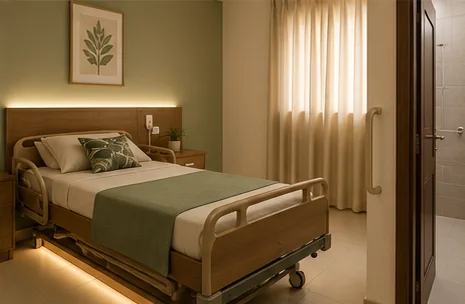
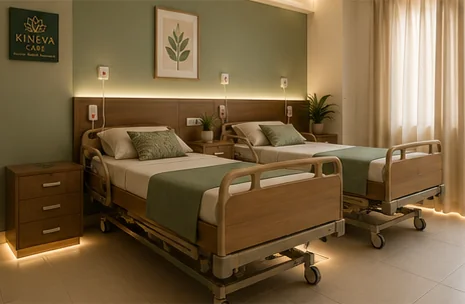
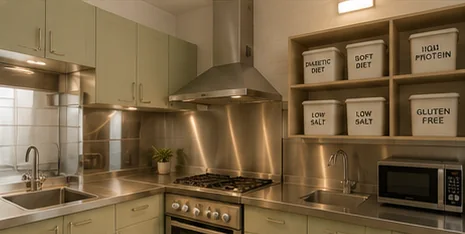
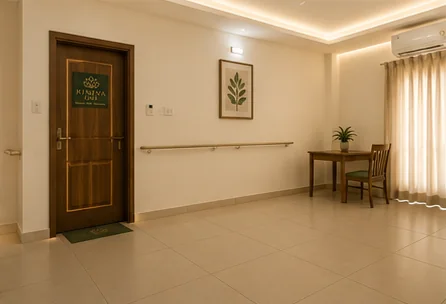
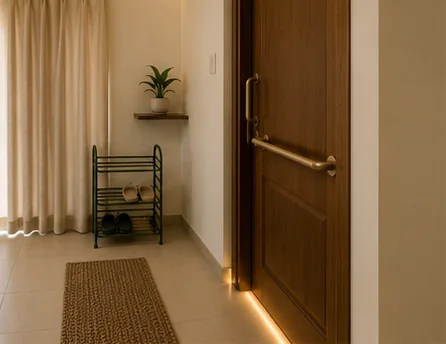
A calm residence close to the city's major hospitals, designed for the weeks between hospital and home.


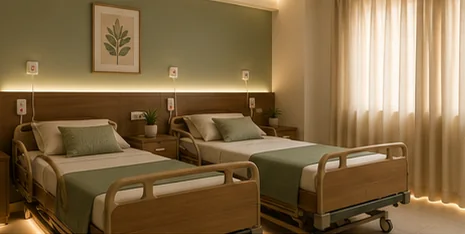
Design renders of the first home. Final finishes may vary.
Hospital-grade beds in calm rooms, set up for safety and rest.
Every patient on the platform from the day they arrive.
Shared meals, games and evenings together, because mood drives recovery.
Close to the doctors who referred you, for reviews when needed.
Soon. People on the waitlist hear first and get the first assessments.
Patients who are medically stable after a hospital stay and need structured recovery, for example after a stroke, brain or spine injury, or joint replacement and other orthopaedic surgery. Every admission starts with a clinical assessment.
Not at launch. We plan to widen the range of patients we care for over time and will update this page when we do.
Depending on the condition: mobility, everyday independence, vitals and sleep, pain, and mood and speech. Each patient's targets are set on admission with their treating doctor.
No. The software compares progress with each patient's plan, flags anything unusual and drafts updates. Clinicians review every flag and make every care decision.
Only the people the patient or family consents to, typically the care team, named family members and the referring doctor. Consent can be withdrawn at any time.
No. Kineva Care is for recovery after hospital treatment. In an emergency, call 112 or go to the nearest hospital.
Tell us who you are and what you need. A person from our team will get back to you, not a bot.